
Category: Technical

Magnolia Residence Interiors


[All photos by BUILD LLC]

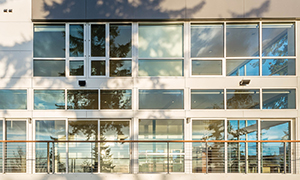
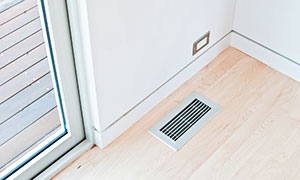
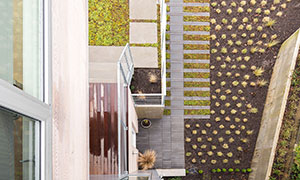
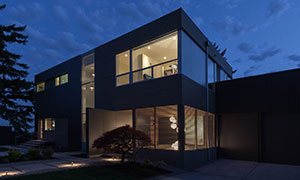
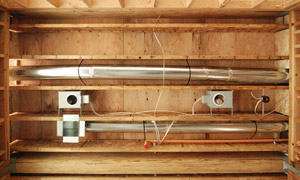
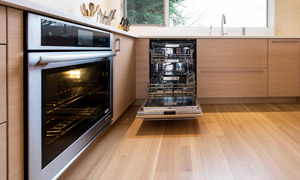
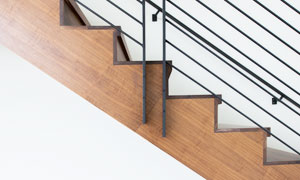
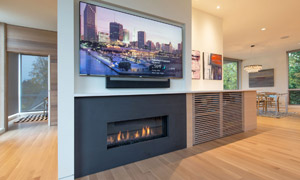
Recently BUILD LLC finished up a modern residential project in Seattle’s Magnolia neighborhood. Today’s post covers the interior package and we’ve got plenty of information to share about the materials, methods and design ideas – all with a healthy supply of links for you to check out. You can take a look at the exterior package here and some night shots here. Many, many more links can be found on the home-owners extremely thorough journal documenting the process.

Read more »

Modern Condominium Build-Out

BUILD LLC PH03 Living Room Dusk 01
[Photo by BUILD LLC]

A downtown Seattle condominium project of ours was recently completed and today’s post will cover the materials, methods and trades of the project.  You’ve heard us say it before and you’ll hear it again: the primary ingredient of a successful project is extraordinary clients and this project has an extra dose of it.  The owners brought a clean, Scandinavian aesthetic to the table in addition to dozens of creative design ideas.  The completed space achieves that warm-modern quality that is sleek, spacious and unadorned, at the same time comfortable and livable.  The owners understood the importance of discipline in design and it paid off with an effective use of space, rich materials and smart systems.

Read more »

Interior Screening

BUILD LLC PH03 Dining Room Night 02
[Photo by BUILD LLC]

BUILD recently completed a penthouse project in downtown Seattle which makes use of interior screens to define space, maintain privacy and accentuate light.  Some new materials and methods are put to work and you may find it useful.

Read more »

Mid-Century Modern Remodel

buildblog-mid-century-modern-06

BUILD LLC recently completed the design and remodel of a mid-century modern home in Seattle’s Magnolia neighborhood and has some valuable information to share.   As with many of Seattle’s mid-century residences, this home was overdue for considerable updates.  The “bones” of these structures are typically very solid; the concrete and framing can be surgically retained and, oftentimes, featured for their richness and texture.  Efforts and funds can be directed toward reorganization of the space planning as well as the kitchen, bathrooms, cabinet package, surfaces and systems (heating, plumbing, electrical).

Mid-century modern plan Model (1)

Read more »

Guide to Copper Weathering

Although generally familiar with the stages of weathered copper, we didn’t actually know the data behind the process.  Our architecture professors probably attempted to get this information in our heads at some point, but that was prior to the copper renaissance we’re seeing in modern architecture… and let’s face it – in school copper usually meant old Danish church steeples.  Having a new found curiosity about the weathering of copper we set out to re-educate ourselves.  Most important to us was the timeline in which copper turns from bright metallic pink to darker browns to the greenish turquoise.  We were aware that copper weathers differently in various climates, but again, we simply didn’t know the technicalities.  So we scoured the web, tracked down some data from a handful of great technical sites and have combined some useful information and color swatches into a quick reference guide.  We’ve also rounded up a few modern projects from the Pacific Northwest which are good examples of each stage.

Salmon pink copper: New panels on a house under construction in Seattle’s Magnolia neighborhood

Russet brown copper: Douglas-Truth Library in Seattle by Schacht Aslani Architects

[photo courtesy of Schacht Aslani Architects]

Chocolate brown copper:de Young Museum in San Francisco by Herzog & De Meuron

[photo Michael Layefsky on Flickr]

Light green copper:Marine Sciences Building on the UW campus in Seattle by Alan Liddle Architect

[photo by BUILD llc]

A great guide to copper weathering, projects, technical information and detailing can be found here.
Portfolios of award winning copper projects can be found here and here.

Picnic Seattle

Monday September 29th marks the opening of Picnic, a brand new food and wine boutique here in Seattle on Phinney Ridge at 6801 Greenwood Ave N. Owners Anson and Jenny are a couple of uber-talented chefs and culinary visionaries who came up with the concept and brought it straight to BUILD llc. We were quickly enrolled in their vision and proceeded with the design and build-out.


[photos by BUILD llc]

The finished space is clean, sleek, uncluttered and vibrant. It focuses on plenty of display area for delicious products and options, without overwhelming the consumer. The goal was to create an inviting space, a storefront that is visible and enticing for passer-bys. The interior is modern and refined but still evokes a sense of establishment and demonstrates Anson and Jenny’s expertise in food and wine. Picnic is creating some of the top take-away food in the city and doing so without the food becoming too precious or fussy.


[photos by BUILD llc]

Here’s the BUILD technical scoop:


1. Dark-stained quarter sawn walnut cabinets with conversion varnish, and adjustable shelves. All exposed faces were fabricated by Special Projects Division (SPD) with sequenced (all from the same log) veneers on platform material using a 10’ vacuum press.
2. Exposed ducting, plumbing, electrical and fire sprinkler systems, painted white to match walls & ceiling.
3. Custom fabricated steel ladder on casters and mounted to steel tracks at top and bottom of wine cabinet. Ladder assembly is cold rolled steel, cleaned, blackened and waxed.
4. Stainless steel sleeves at adjustable shelf pins (part of SPD cabinet package).
5. Custom fabricated steel frame movable tables on casters, walnut table tops and acrylic shelves (by SPD). The tables serve dual purposes of display/ storage and convert to dining tables for special events. The steel frames are an assembly of hot rolled steel angles which were wheel-abrated & waxed and cold rolled steel tubes which were blackened & waxed. The goal was to get the disparate types of steel to appear similar in color/ texture. The steel assembly is mechanically fastened with thru-bolts.
6. Recessed display cabinet made from mangue wood (by SPD). It’s on axis with entry and provides a backdrop to the entry.
7. Solid wood door with frameless single rabbet jamb. L-metal inserted into dato around frame and taped to (and finished with) drywall.
8. Custom fabricated stainless steel filler panels so that wine refrigeration unit flushes out with adjacent refrigeration units (part of SPD casework). The wine fridge is the EuroCave Performance 259 Wine Cellar.
9. Stainless steel refrigeration unit with glass doors by True Mfg, model TS-49G-4.
10. 14-ply ¾” void-less material w/ maple finish veneer- commonly referred to as “apple-ply”.
11. Existing slab on grade with Ardex Feather Finish skim coat and sealed with polyurethane. It was challenging getting the separate pours (from separate bags) to color match with one another.
12. Rubber base by Roppe.
13. Resolute lighting: “David” line.
14. Existing concrete columns painted dark.
15. Custom fabricated steel frame movable table on casters with solid maple “butcher-block” tabletop (by SPD).
16. Arne Jacobsen Series 7 chairs and bar chairs.

It wouldn’t be a BUILD project synopsis with out a construction photo montage:

[youtube=http://www.youtube.com/watch?v=27AcTEDHAgs]

and, naturally, this modern addition to the city is up on The Modern List Seattle. Whew… did we cover everything? So enough about design and construction, get yourself over to picnic and have some phenomenal eats…

Picnic a food + wine boutique
6801 Greenwood Avenue North
Seattle WA 98103
206.453.5867

Board & Batten Siding

Board and batten siding is the underdog of siding systems, but we like it for the following reasons:
It has the potential to be visually clean and crisp
It has a timeless look and weathers nicely if implemented correctly
The system takes the natural expansion and contraction of materials into consideration
It’s been around for a long time, carpenters and siders are familiar with it
It’s durable

So why isn’t board and batten siding more prominent in modern architecture? A quick Google-image search suggests that most board & batten siding systems are associated with traditional architectures – country cottages and old leaning barns. The word “rustic” comes up often when researching board and batten systems. But technically the system has everything necessary to be a serious, modern strategy for siding. So the BUILD research and development team has put together a guide to board and batten siding systems. These diagrams are just departure points – coordinate with your structural engineer for unusual situations and the use of panel products.

1. Horizontal spacers can be placed behind the board & battens for better air circulation, the spacers also provide a uniform nailer backing to the system.
2. The fasteners and pattern will depend on the size of the batten.
3. A variety of products can be used in lieu of building paper including VaproShield products.
4. 1/2″ sheathing can be used if blocking is installed behind at fastener locations. We recommend just bumping up the sheathing to 3/4″.
5. The fastener pattern for panels depends entirely on the panel product used and the overall geometry.

With wood boards the fasteners should be centered on the board so that the board can expand and contract in both directions. Using fasteners at the edges will cause the boards to crack over time.

We’ve also tracked down several modern applications. Let us know of any sharp B&B applications you know of out there.

Dogtrot House in Poplarville, MS by Waggonner & Ball Architects

[photo by Kerri McCaffety, Mac Ball, Catherine Smith]

Donald Barbour House in Kentfield, CA by John Marsh Davis
The batten geometry integrates with the structural columns… nice.

[photo by Alan Weintraub]

House for an art collector in Therwill Switzerland by Herzog & de Meuron, 1986
Precast concrete panels and pine slats

[photo by Hisao Suzuki]

Wood Residence on Vashon Island, WA by James Cutler Architects
Cedar board and battens

Irby House at Sea Ranch, CA by Obie G. Bowman, 2001
Redwood board and battens

[photo by Tom Rider]

Girvin Cabin on Decatur Island, WA by Miller Hull


[photo from Miller Hull Architects of the Pacific Northwest by Sheri Olson]

City Hall on Bainbridge Island, WA by Miller Hull, 2000


[photo from Miller Hull Architects of the Pacific Northwest by Sheri Olson]

Nickerson House in Seattle, WA
Painted Hardi-board and wood battens, anybody know the architect of this one?

[photo by BUILD llc]

Shack at hinkle farm by Jeffery S. Broadhurst

[via materialicio.us]

“Barn Doors Open” in Falmouth, Maine by Kaplan Thompson Architects
The added volume uses a reverse board & batten system.

Modern House: materials and methods of the current time

BUILD llc recently completed a home on Bainbridge Island here in the northwest that uses some materials and methods that may be of interest. The home was designed and built for Dr. Marc Ferrin. We’ve said it before and we’ll say it again: good projects are the direct result of extraordinary homeowners willing to partake in the adventure of design and construction & trust our guidance.

Read more »

Recent Materials + Products

BUILD llc condominium project

Recently BUILD finished up a nice little condominium interior which introduces several new products to the palette. We’ve put together a brief roster of several materials, products and methods that may be of interest. With the condominium boom here in the northwest, several of these items seem to lend well to a kit-of-parts for condominium upgrades. As with any project, a successful end product can largely be credited to extraordinary homeowners and a contractor that slaved over the details.

BUILD llc new materials + products 01

BUILD llc new materials + products 01
[Images by BUILD llc]

1. Henrybuilt VGC bamboo cabinets with under-mount puck lights at uppers
2. Henrybuilt d-pull stainless steel hardware
3. Sub-Zero 700BC 2-drawer under-counter refrigerator/freezer with integral panels to match cabinets.
4. Light shelf with painted wood valiance and concealed Juno TL102 on Juno Trac 12 system
5. Juno Trac 12 system with Juno TL112 adjustable heads. This is a clean, low-profile track system for a concrete lid where it’s not possible to recess the track into the ceiling.
6. Caesarstone 2430 “Tequila Sunrise” countertops, 3mm thick at counter, 2mm thick at backsplash. Be cautious of the local distributors and installers of this product. We found that the Caesarstone recommended local supplier wasn’t detail oriented enough for a project of this precision.
7. Kahrs “Genua City” 2-strip maple wood flooring over Dura-son acoustical pad. Acoustical pads are typically required in high-rise condominiums; so far the “Dura” line of products has done a good job of meeting these requirements.
8. 1” x 1” solid maple base to match flooring. We find that in smaller spaces the smaller trim helps with the overall scale of the room.
9. Grohe Single Spray Pull-out, 32 170
10. Raeco concrete skim coat on existing concrete column. The original idea was to leave the existing concrete shear walls of the building exposed. Because of the poor finish quality of the existing walls they were enveloped with ¾” Wonderboard and topped with a Raeco base coat. Two Raeco skim coats were then applied and sanded to achieve the finished product.
11. Raumplus S3000 aluminum sliding door system with 6mm diffused white glass – these “sliding walls” hide all of the various closet functions (washer, dryer, furnace) behind a continuous run of sleek, sliding glass walls. The doors are backlit with Alkco fluorescent ceiling mounted strip lights for that glowing look. The doors include a double top track and a recessed routed floor track flush with the floor. The local rep here in Seattle is Pedini.
12. Schluter aluminum edge profiles between wood floor and tile.
13. Pental Lagos Blue limestone
14. Custom frameless glass enclosure & glass door with minimal chrome hinges by Distinctive Glass here in Seattle.
15. Robern recessed flat mirror door cabinets.
16. Alkco LIN40 150 watt linear incandescent wall mount lights. The Aamsco Alinea line is also a good option.
17. CR Laurence BM series Chrome towel bars. These also come in a trim-less version that can be mounted to glass shower enclosure walls.
18. Toto CST414 toilet
19. Lacava Aquaplane #5066 box sink. Be cautious with porcelain sinks from Lacava – the dimensions on their website specs don’t take into account the inaccuracies and tolerances of fired products like these sinks; subsequently dimensions were off by as much as ¾”. For dimensional accuracy we recommend looking into some of the hybrid plastic products out there like Wetsytle.
20. Omnia 025 passage stainless steel lever with (3) Stanley 4 ½” x 4” stainless steel hinges
21. Grohe Essence 32 216 Chrome faucet and 28 871 shower faucet
22. Pental ES#19 5/8” tall x 1-7/8” wide matte finish glass tile with 2% clear finish mixed in at random pattern, mounted horizontally. Glass tiles are more brittle than ceramic tiles and break easily, it takes an accomplished tile setter to work with the product and get the tile grid in alignment with the geometry of the space. The perfect alignment of the recessed shelf and the tile grid takes a great amount of coordination between the carpenter and tile setter (one of the same on this project).

The general contractor on the project is Keith Griffin of Griffin Construction.

Basic Photography for Architects

We’ll be the first to admit that we’re no pros when it comes to shooting photos but we’ve come across a couple of tools lately that have allowed us to achieve much greater results with our finished photographs. The options of cameras, software, and techniques within each software program are overwhelming – so we asked some photographers, friends and camera geeks for advice and we put together a great, cost-effective photography kit. We’ve been using this kit for a couple of months now and we think this info could be useful to some of the small shops and solo architect/designers out there. Like us, you probably don’t have a marketing department – but with the right tools, a basic understanding of the technology, and some time, you’ll get much more mileage out of your photos. We’ll try not to bore you with all the data, acronyms and technical geek-speak and just give you the info you need. We’ll also keep this brief; we’re only going to discuss a couple of tools in this post, if you find this information to be useful, let us know and we’ll get more up.

CAMERA
Nikon D80 body ($720 new, $650 used): it’s got all the options you could ever want to experiment with and you can override them all and let the camera decide what’s best simply by turning the knob to “auto”. The camera has auto focus, a self timer, a built-in flash, and gets about 2,000 shots per battery charge. You can use all kinds of lenses on the camera body (wide-angle, zooms, macro, etc.) and the maximum size image is 3,872 pixels by 2,592 pixels – resulting in a 28.7 MB photo, which should be more than enough for architectural shots. The camera hooks straight up to your PC or Mac with a USB cable – no software necessary.

Nikon D80

A simplified version of this camera, without so many options, is the Nikon D40 ($500 with a more standard 18-55mm f/3.5 lens): also a great camera, but you’ll still need the wide angle lens listed below (not all lenses will auto focus with this camera – so do your homework before purchasing). For a basic refresher course on the mechanics of SLR (Single-Lens Reflex) cameras refer to this Wikipedia entry.

LENS
Tokina wide-angle 12-24mm F/4 ($450): We’ve found that we really only need one lens for everything we do. Since we’re not taking photos of race cars speeding past, flora & fauna close-ups, or extreme zoom shots of celebrity private lives, a good wide-angle lens does it all. In architecture and interiors the common challenge is to get the whole building or room in one image. This lens can do that without distorting the image too much.

Tokina Lens, Manfrotto tri-pod & head

A better quality lens is the Nikon 12-24mm F/4 ($900) but we’ve been happy with the Tokina so far and we don’t know enough about high-end photography to know what we’re missing anyway. For a basic refresher course on the mechanics of a wide-angle lens refer to this Wikipedia entry.

TRIPOD & HEAD
Manfrotto 055XPROB Tripod ($175) & Manfrotto 484RC2 Head ($50): We went with a tripod that will last the rest of our lives. We figure that cameras are going to continue to get increasingly clever, but we’re betting that the tripod concept isn’t going to change much. Unfortunately, nice tripods require a head (which connects the tripod to the camera like a middle-man) and it must be purchased separately. We’re not sure why this is but after dropping fourteen-hundred bucks on a camera what’s another fifty.

The above camera equipment can be purchased through Amazon or if you’re a Seattleite head on down to Glazers (they sell used equipment as well).

SOFTWARE
Adobe CS2 ($200 on EBay): Although this isn’t the latest and greatest of the Adobe graphic packages it does everything you’ll need as an architect or designer. The newest version of CS3 costs about $1,700. Both packages include several software applications – most importantly Photoshop and Illustrator.

cs2cs3.jpg

Okay, that’s the hardware and software (totaling about $1,600 + tax & shipping), now let’s get to some techniques.

WIDE-ANGLE LENS COMPARISON: Obviously the greatest advantage of a 12mm wide-angle lens is that it allows you to get more building and surroundings into a single frame. Here’s a quick experiment shooting approximately 70’ away from the object of interest (in this case the Park Modern was kind enough to be our model).

Park Modern experiment photos with Powershot

Using the entirely automatic Canon Powershot SD450 (a good point & shoot camera) you are left with 3 rather uninspiring choices – either cut some of the building off (left), show a series of images as a collage (center), or awkwardly splice a series of photographs together (right).

Park Modern - Nikon D80 with 12-24mm f/4

While this shot by the D80 and wide-angle lens is not of finished quality (yet) it gets the entire building into a single frame and then some. We’ll need the extra space around the building a little later in the process.

Often with interior shots there only several feet to work with and get the shot you want. In this example of a built-in closet there was only six feet of back-span. Once again the point and shoot requires many photos whereas the wide angle lens can get most of the space in one frame.

Park Modern closet - Powershot

Canon Powershot options: collage (above left) or splice (above right).

Park Modern closet - Nikon D80

The wide-angle lens gets most of the closet onto one image.

Few interior shots offer the amount of light that a point-and-shoot camera requires, as is the case with the closet above. This is where the tripod comes into play. Once the camera is mounted on the tripod the shutter can be opened for longer, subsequently allowing more light in. A shutter speed of 1/60th of a second is the maximum amount of time you should use without a tripod. With the tripod, low light conditions are no longer a barrier to good quality photos. Notice in the Powershot collage above that the camera changes the auto settings from one shot to the next, some shots are lighter and some darker, making it more difficult to splice the photos together.

PERSPECTIVE CROP: Once you’ve got the shot it’s time to sharpen it up in Adobe Photoshop. The single greatest tool we’ve found so far for architectural shots is the crop & perspective tool. This tool allows you to straighten out the photo and keep the vertical lines perfectly vertical, a must for professional architectural shots.

toolbar 02

PM photoshop crop

Click on the crop tool in the toolbar (on the left in the screen shot above). Click and drag the crop tool to the desired crop of the image. Then make sure the perspective option is checked in the toolbar (on the right in the screen shot above) and move the perspective points to stretch the image as need be to get the vertical lines vertical. This typically requires a bit of back and forth. You should end up with an image that is both cropped and that has perfectly vertical lines.

PM_example_03

CONTRAST: Another handy post-photo tool is the contrast tool. In this particular shot we brought the contrast down a bit to lighten up the building and enhance the clouds and reflections.

PM_example_04

COLOR BALANCE: The color balance tool is also a favorite; in this shot we bumped up the reds and yellows a bit so that the wood tones in the building are more prominent.

PM_example_05

It’s difficult to see all the results when the shots are only 400 pixels wide but you get the point. The single most important tool is looking to the masters. As humbling as it is to analyze the work of the professionals we find it’s very helpful to the process of improving our own photography skills. Here are a couple of top-notch photographers we look to for inspiration: Chase Jarvis, Hisao Suzuki, Art Grice, Benjamin Benschneider, Bernd & Hilla Becher, Candida Hofer, and Julius Shulman.