



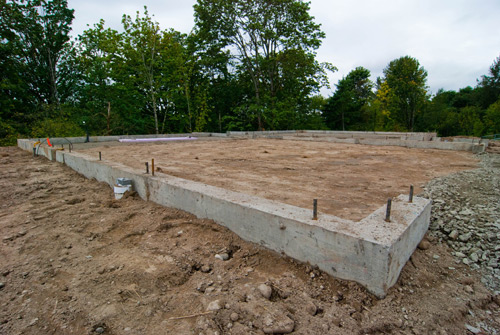
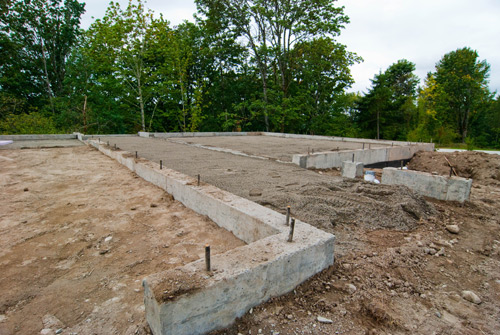
The foundation and backfill are completed on our new Bellevue house and it’s a great time to share a few important tips on groundbreaking and concrete. In line with a modern design philosophy, the foundation should look so simple and straight-forward that it’s a relatively invisible feature once the structure is complete. But this doesn’t necessarily mean that the install is easy or mindless. Another key piece of the modern philosophy is that time, effort and thoughtfulness are each crucial to the end product that seems “simple”. Here’s our top 10 bullet points to tackle a new foundation
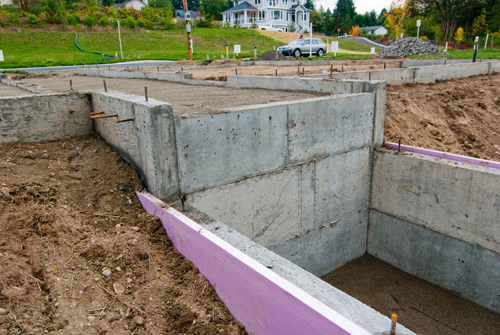
1. Simplify the foundation as much as possible in the design phase. Multiple footing steps within the foundation plan add cost and make for complicated reviews of the built work during site visits. A couple of big foundation steps to account for a changing grade are better than a bunch of small, incremental steps.
2. Simple datum points are key. Create some simple datum points that the excavator and concrete contractors can understand. Bottom of footing (and line of excavation) and key top of wall locations are crucial. We used to rely more on grade-lines, but once the entire building area is excavated and there are piles of dirt stockpiled all around, grade-lines are no longer visible.
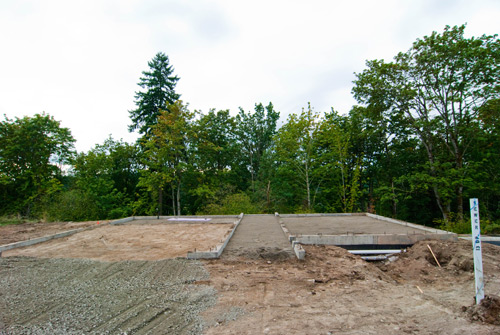
3. Keep the foundation to a handful of simple details. This is challenging given the hardware requirements, crucial dimensions and other “can’t miss” information that will establish your building outline and framing dimensions. We’ve found it can be helpful to highlight or redline the structural foundation plan with a few key items that help the other pieces of data fall into line.
4. Ensure that all wall edges get covered. You don’t want a slab/ wall junction line to be visible once the finish is complete (uggho). Sometimes this means that the concrete contractor will have to shrink the top of wall by inlaying a wood buck-out to get the slab to extend under the framed wall, but it’s worth it to not have to figure out how to fix that line later. This is especially critical on modern projects with limited or no base to cover.
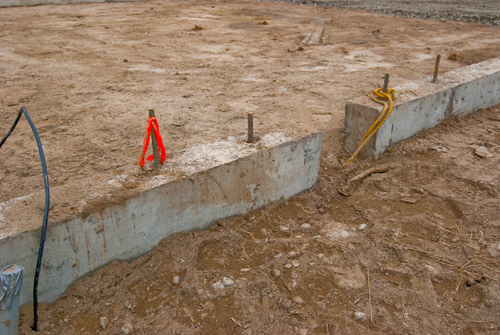
5. Talk your concrete contractor into installing all bolts needed, even if it involves manipulating (or drilling) the form-board panels. They can use really old panels that you can pay them to ruin with drilling, but the benefit of having bolts cast-in rather than having to drill/ epoxy- grout later, is huge.
6. Beware that contractors may be tempted to take the easy route, even if this leaves you with a much harder route later. Just like the bolts above, there are other small steps that can be taken, like extra bracing for the top of panels to ensure very plumb walls, that will help everyone else following them on the job.

7. Review locations of utility services (especially underground electrical service), internal downspouts, etc. to ensure that they can get into the ground cleanly. If some type of pipe is running inside the framed wall, you may want this to exit the wall below grade so it’s never visible. There is nothing quite like a pipe coming out of a wall and making some awkward transitions around the concrete before it can get hidden in the ground. A small 1’ buck-out in the form can allow you to sneak this into the ground.
8. Stay on top of your plumber and electrician. If plumbing or electrical runs factor into the concrete pours, these trades can hold up the concrete sub and cost valuable time.
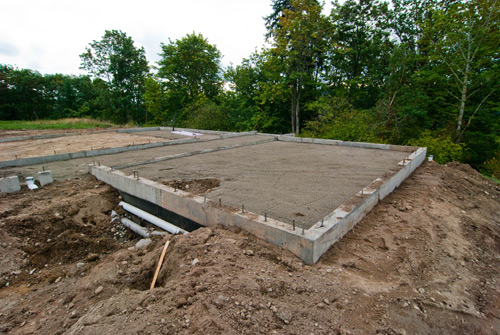
9. Consider adding lampblack or similar type color additive. If there is a significant amount of exposed concrete, you may want to consider adding lampblack to the mix. It takes the banal color of typical concrete and makes it a little more special. We typically try to minimize our walls (so no color is needed) and we use our color budget on the more visible finished slab.
10. Dress for the part. There is, perhaps, nothing quite as pathetic as an architect that shows up to a post earth-work site meeting in their thin-soled Italian loafers. Job sites are messy during the foundation phase, wear your boots. A pair of well worn boots will also earn some respect back with the foundation crew. It never hurts to show up with donuts or pizza either.
Got a suggestion, question or tip of your own? Hit that comments button.