



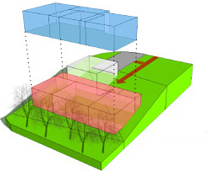
 We’re currently in schematic design on a new house and, being knee deep in conceptual thinking, we thought it’d be a good time to get some diagrams up on the BUILDblog. We find that diagramming is critical to the design process for several reasons:
1. FROM CHAOS TO CLARITY: The information gathering stage on most projects produces a substantial amount of data. City & state codes, covenants, site parameters, and all that other good stuff… it all adds up. Good diagrams turn chaos into clarity. And clear diagrams allow a client to get the gist of a project’s requirements without being dragged through the mind-numbing boredom of the City of [fill in the blank] Amendments to the International Building Code. Everybody wins.
On the image below, the first diagram boils-down all the site information into what matters most for the site planning. The second diagram describes the observations made on site by ourselves the clients. The third diagram takes all of that information and translates it into site strategies. Running along the column on the right is a narrative describing the most important attributes the design should acheive. This “Ordering Mechanisms” sheet is the go-to sheet for the basic DNA of the project parameters.
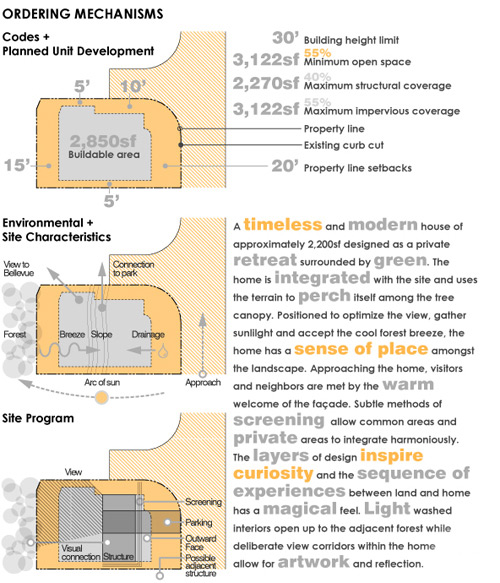
2. ROADMAP: As the process of design becomes more comprehensive, the amount of information can become overwhelming. The initial diagrams are always a good reference point –a good reminder of the most important aspects on a project. The diagrams act like a roadmap; at any point in the process, the “Ordering Mechanisms” sheet can be referenced to get back on the target path.
3. CLIENTS ARE NOT MIND-READERS: The process of design is intricate and multifaceted. Along the way, architects make a lot of decisions in their own heads; decisions that are probably to the benefit to the project, but the path of design still needs to be described and communicated to a client.
The diagrams below take the information from the “Ordering Mechanisms” series above and apply those parameters to physical volume, relationships of spaces and organization of functions. The diagrams describe advantages and disadvantages of each scheme; they also explain why some options have been eighty-sixed along the way. Just because a design idea seems obvious to the architect, doesn’t mean that it’s apparent to someone who hasn’t had their head in the building code all day. The diagram spells it all out.
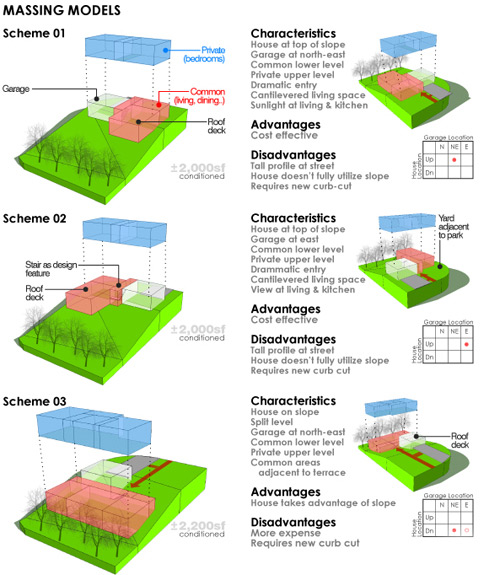
4. CLIFF NOTES FOR ARCHITECTURE: We typically review diagrams (like the ones above) during design meetings with clients. It’s a lot of information to cover in a small amount of time and the physical prints provide a reminder of the discussion. Later, once the client(s) has had a drink or two after all that architectural jargon, the printed diagrams serve as good notes from the meeting. Clients can also absorb the data at a more leisurely pace.
5. PROMOTION: diagrams allow an architect to promote their method of thinking. It’s challenging to try and verbalize the process that an architectural project goes through, especially years after the project has been completed. Solid diagrams can be printed, exhibited, emailed and posted to blogs. Now more than ever, in the digital information age, diagrams have the ability to be infectious.
RESOURCES: If you like what you see, here’s a few sources we look to for smoking hot diagram techniques:
Books by Mutabor: Lingua Universalis & Lingua Grafica
Nicholas Felton and his annual reports
The New York Times graphics department
There’s also some previous BUILDblog posts that cover diagramming here and here.
Cheers from team BUILD and have an extraordinary weekend.