



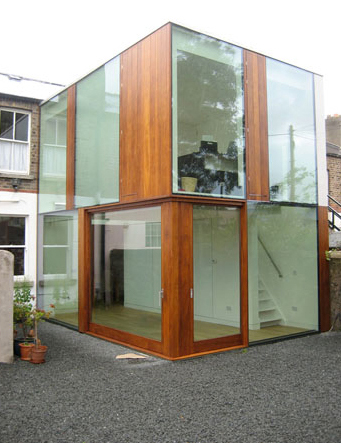
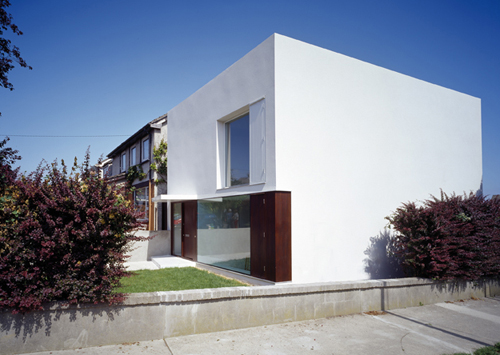
 What is it about the work of ODOS architects that is so fascinating and attractive? Even after pouring over their website with a discerning eye, we still can’t quite put a thumb on what makes their projects so mesmerizing. It’s hard to comment on the “design” because what makes for such elegance and beauty in the finished work would appear to be the lack of design. Rather, the finished photographs communicate a system of planes divided into simple geometric formulas. The built-form almost seems to relate more closely to mathematics than architecture – and wonderfully so. Using a system of formulas in which the sum of the parts amounts to an architectural solution is thought-provoking and desirable to us.
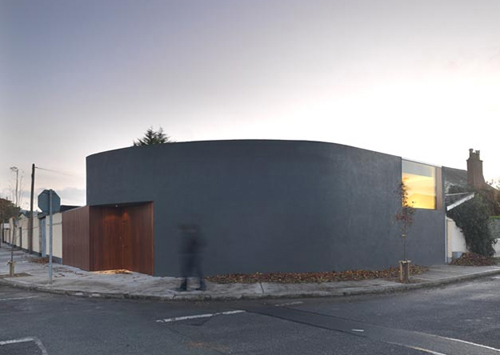

The imagery brings to mind many questions. What kind of client commissions something of such straight-forward composition? What does the schematic phase look like with something of seemingly clear initial concept? What do these homes look like now that the camera is gone and they’re being lived in? There’s a beauty in not knowing the answers – maybe it’s best we not find out. Part of the thrill is the mystery.
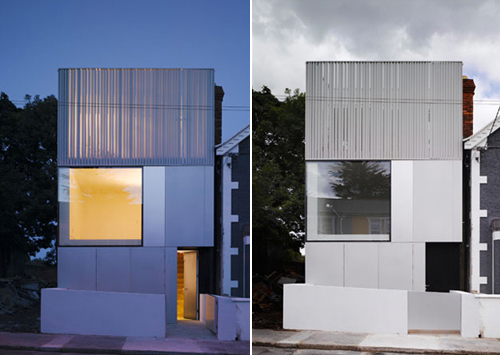

Studying the details of the projects, it becomes evident that there is a tremendous amount of engineering behind each inconspicuous move. Windows span from floor to ceiling leaving so little a reveal that the glass partitions seem invisible. Nearly everything is concealed in ceiling or wall planes; door tracks, blinds, lighting, heating and air conditioning. It’s safe to assume that the simple wall and ceiling planes are concealing a complicated web of systems, all working with and around each other. There is a mature and disciplined aesthetic that doesn’t need to advertise how clever it is – the smart-ness is just quietly doing its job, allowing the observer to enjoy the view.


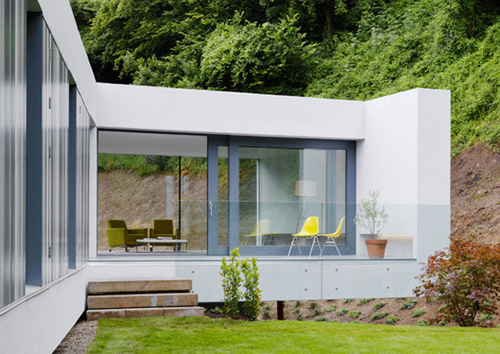
It could be concluded that these structures are a complete departure from nature, but we admire that the objects are deliberately foreign within the organic context. It makes sense to us that a building is a building and shouldn’t try and represent geometries that are not inherent to the nature of construction and the daily rituals of the inhabitants. By not trying to emulate natural forms or disappear in the landscape, the work seems to establish a profound respect of nature.


Too often, modern architecture of this caliber becomes delicate and precious. The objects become fetishes in glossy magazines rather than structures for people to work, play and live in. The blocky geometries and familiar materials of this work, however, lend to a sensibility and seem friendly to the pedestrian. There’s a toughness and a timelessness that allows this work to be practical.

A BUILDblog cheers goes out to ODOS – thanks for sharing a portfolio of phenomenal projects with us.
Let us know how the work resonates with you…