
Liberated Architecture

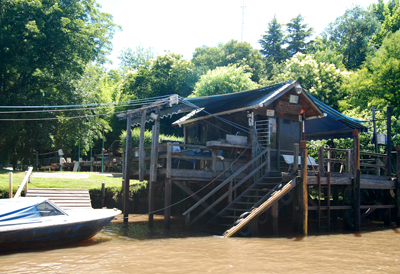
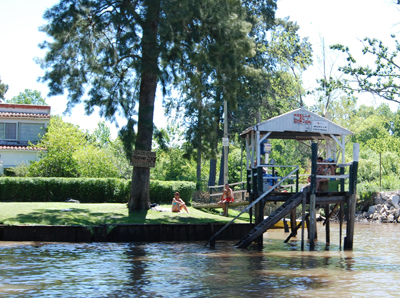
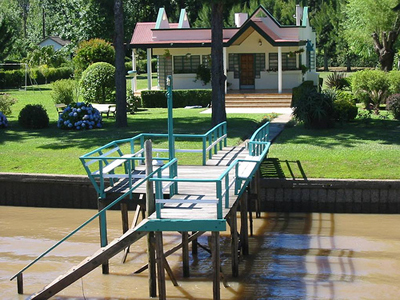
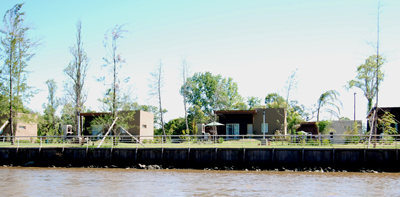
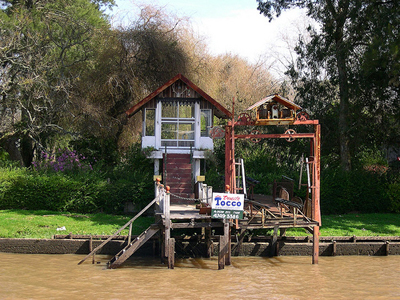
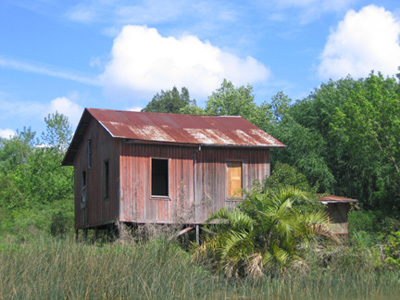
Recently on a trip to South America we visited Tigre, a community about an hour north of Buenos Aires by train. Also known as the archipelago of Argentina, the area is a web of inter-connecting rivers and streams. Within the labyrinth of waterways were hundreds of homes and cabins representing the full spectrum of form, size and design philosphy. There didn’t seem to be any master-plan, development or overall scheme.  Aesthetic covenants seemed to be excluded from the community and, judging from some of the structures, it didn’t even seem like a permit process or building department was involved. It appeared to be a community of liberated architecture. Some projects were clearly built from an architect’s drawings; others could have been crafted on site without a single piece of documentation. Needless to say, we were fascinated.

tigre-photo-by-andrea-cb
[Photo by Andrea CB]

tigre-photo-by-magda-50
[Photo by Magdo-50]

build-llc-tigre-10-avl
[Photo by BUILD LLC]

tigre-photo-by-gabriel-robledo
[Photo by Gabriel Robledo]

build-llc-tigre-05-avl
[Photo by BUILD LLC]

build-llc-tigre-09-avl
[Photo by BUILD LLC]

build-llc-tigre-01-avl
[Photo by BUILD LLC]

build-llc-tigre-02-avl
[Photo by BUILD LLC]

tigre-photo-by-hanneorla-2
[Photo by Hanneorla]

tigre-photo-by-hanneorla
[Photo by Hanneorla]

build-llc-tigre-03-avl
[Photo by BUILD LLC]

build-llc-tigre-04-avl
[Photo by BUILD LLC]

build-llc-tigre-07-avl
[Photo by BUILD LLC]

tigre-photo-by-bdnegin
[Photo by bdnegin]

tigre-photo-by-bloggingsouls-2
[Photo by Bloggingsouls]

It’s easy to imagine that an environment like this is the product of a community that solves differences through communication rather than filing lawsuits.  A population of individuals who maintain an open mind about appearances and design rather than trying to control and manipulate the built environment through review boards and covenants.  A society that designs and builds responsibly because it’s the right thing to do, not because a building department required them to do so.

The diversity of architecture and construction in Tigre was refreshing and it seems like there are some fundamental lessons to learn here about society and behavior.


14 Comments

  • By thedailycrazy, February 16, 2009 @ 4:25 am

    What a mixture! Enjoyed looking through.

    It always frustrates me that when planning departments are involved (ostensibly to make development better for everyone’s quality of life) they mainly result in homogenous, mediocre (or worse) and generally tedious buildings. Individuals are the great innovators – maybe we should all be given a bit more leash!

  • By Nick, February 16, 2009 @ 4:38 am

    There is also the poverty side of the equation to take into account. Especially that it makes things interesting here. I believe it’s more “do with what you have” than open-mindedness here.

  • By buildllc, February 16, 2009 @ 8:52 am

    Nick – that’s a good point, finances (or lack thereof) probably have a lot to do with the look and feel of Tigre.

  • By Anson Klock, February 16, 2009 @ 12:02 pm

    that water is such a lovely shade of brown.

  • By buildllc, February 16, 2009 @ 2:40 pm

    LOL – yeah the water didn’t look all that inviting to me, but that didn’t stop the locals from diving in.

  • By gus, February 16, 2009 @ 5:44 pm

    What’s the deal with the cottage encased in the glass box?

  • By aaron, February 17, 2009 @ 9:23 am

    Great scenes, very similar to the amazon’s rubber plantations.

  • By Les Fitzpatrick, February 17, 2009 @ 9:50 am

    And here I thought I was the only one who dreamed of building a home protected from bugs and weeds with a glass surround. The seemingly modest cottage with the museum glass cage is remarkable in form and function. These are truly the kinds of people who don’t throw stones.

  • By buildllc, February 17, 2009 @ 11:02 am

    I can’t find much on the glass house – plenty of photos on Flickr of course but no information on the design, function or neighbors that don’t throw stones…

  • By mike, February 17, 2009 @ 12:41 pm

    Nowadays, the house works as a museum and library. According to the Municipality of Tigre, which was in charge of building the the glass structure around it in order to protect it from the inclemencies of the weather and the passing of time, approximately 50 thousand people reach this place every weekend attracted by the crystal box shining in the horizon.

    via:http://www.welcomeargentina.com/tigre/sarmiento-museum.html

  • By buildllc, February 17, 2009 @ 12:49 pm

    Mike – the man with the answers! 50 thousand people is a lot of boats. All those boats touring through the canals seemed to be one of the few downfalls of the community. And yes I’m guilty.

  • By mike, February 17, 2009 @ 3:56 pm

    yeah, i thought that seemed like a plethora of boats as well.

    there is something that is really interesting in the haphazard abandoned/reclaimed structures. maybe it’s the lawlessness of it?

  • By matthew, February 19, 2009 @ 2:03 pm

    Kevin, what exactly took you down to South America?

  • By Danyell, March 3, 2009 @ 12:06 pm

    I totally agree with Nick’s comment. I am in a small village in Panama and it’s the same here also. Many structures (and tools for that matter) are erected based upon what materials are free or inexpensive. People only make $10 per day….and because of the tropical environment the house is merely a protective shield against rain, wind and pests. This is simple living, this is dwelling. There are building codes and processes here, but few follow them….

Other Links to this Post

RSS feed for comments on this post. TrackBack URI

Leave a comment